The finished Dumaria instruments! from top right, clockwise, are a 'howl dish,' a harp, a guiro/huiro, and some hanging chimes. This is what happens when you read too much Diontopia. Oh wait, there's no such thing as too much Dinotopia.

 Another ancient folk art: wood carving. It's pretty much what it sounds like, but there's a myriad of ways to carve wood, from chainsaw to chisel. Anything from large, rough hewn cuts to smooth polish can be achieved. A fun thing to work with on this image was trying to simulate how a wood gouge cuts with the grain, as well as some traditional patterns that have arisen from it, like the little notches along the tail and the mane. I also enjoyed simulating that high gloss finish, that sinks down into any ridges and catches the light. On real wood the finish can really sparkle and make the wood glow.
  Embroidery is one of the older decorative arts, and has been practiced for centuries from Europe to China. It involves creating a design using colored thread on cloth, often with other pieces of colored cloth sewn on. Lots of different designs are possibly using different stitches, or combination of them. Embroidery can be done by hand, or on a machine, or a combination of both.
  Impasto painting uses thick, wet strokes of paint, generally applied loosely. It's frequently used in oil painting, with paint strokes so thick they may even cast their own shadows. Highlights in particular get really thick, and increase the illusion of sparkle because, not only is the paint a highlight, but the physical paint gets an actual highlight on it because of its thickness. Impressionists used Impasto heavily, such as Van Gogh and Monet. Here is a detail of Rembrandt's A Jewish Bride, showing the impasto technique clearly.
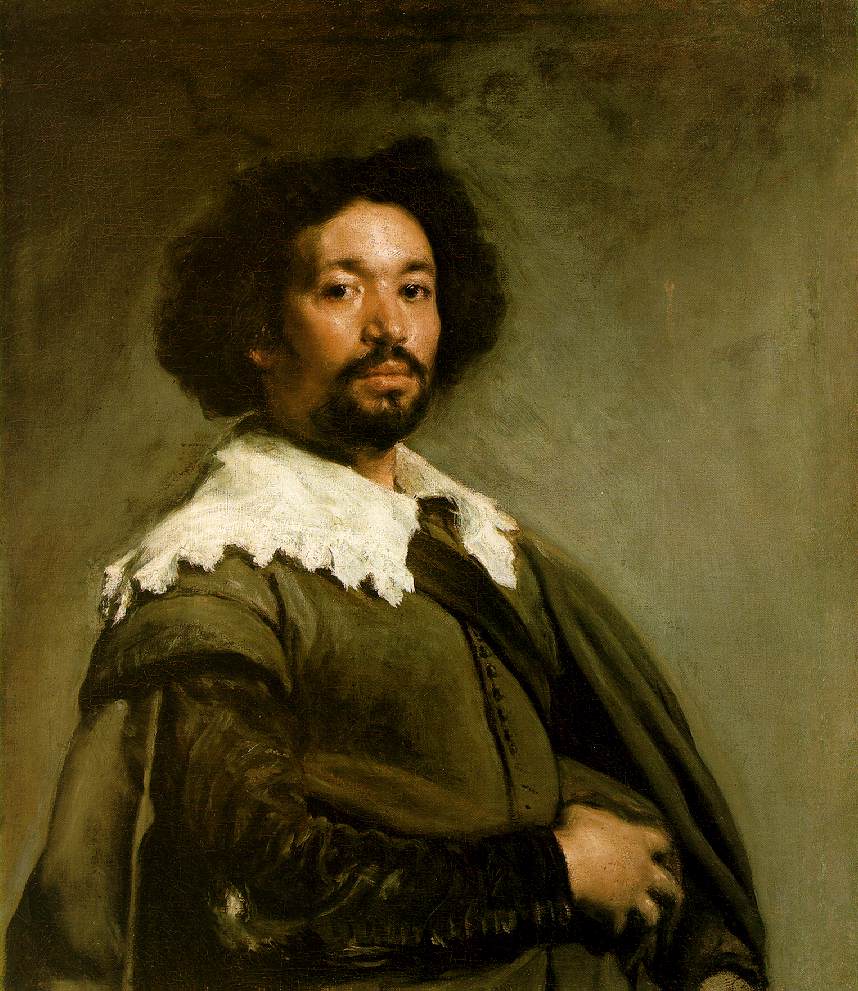
  Dry brush techniques can really cover a wide gamut of techniques and mediums, from oil paint and acrylic to watercolor. It involves putting undiluted paint on a dry brush that is dragged across the surface, leaving pigment on raised areas. Scumbling is when lighter colors are dragged over darker colors, and can give a rough, textured effect, or a light gauzy look, depending on what kind of surface it is applied to. It generally gives a solid but broken line, with hard edges, but can appear soft if done over a fine texture. Diego Velasquez was a master of this, you can see that he was dry brushing some of his finer, final brush strokes in this image of Sibyl with Tabla Rasa and this portrait of Juan de Pareja. The ends of strokes are often more broken than the beginning, which gives much of the look to Chinese brush painting, which often uses a combination of dry brush over light, wet, washes. This image, by Yet Por Cheng, shows the effect nicely. The oldest known art even uses something akin to dry brhing, you can see how the texture of the rock affected how pigment was rubbed over it in cave paintings like Lascaux.
 This is a 'digital lithograph' (d0n't kill me, printmakers) each color was done on a separate paper, by hand, then scanned and registered digitally. Color was added to each layer to simulate different color runs. This is a mock cover for a short story written by Laura Jennings about Psychic Dolphins who fight Aliens in Space. Yes. You heard me. Besides it being an interesting short story in and of itself, it was just way too good to pass up the opportunity to draw.
 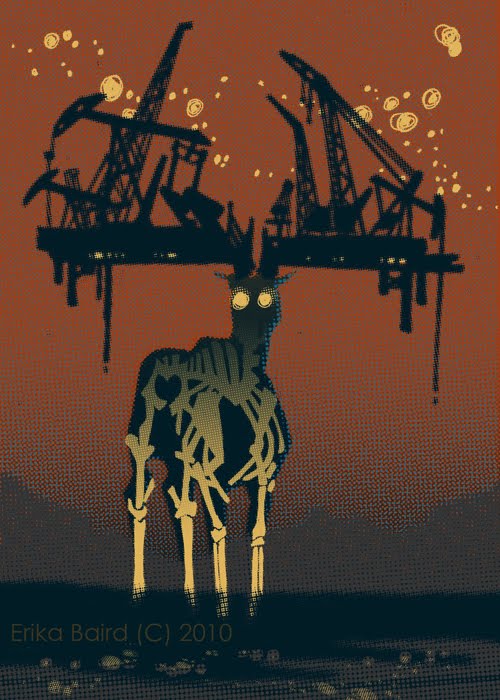 Also known as silk screening, uses a layer of silk or muslin stretched taut across a frame of wood, using water adhesive stretching tape to pull it taut. This frame is laid flat on top of the surface that is to be printed on, which can be anything from metal, wood, or glass, to, of course, paper. Stencils are used to control where ink goes through onto the surface, and are laid over the silk, then have thick, gel like ink squeegeed over them, leaving the first layer of ink on the surface, in the shape of the stencil. Other colors may be added on top, but only when the first layer is completely dry.
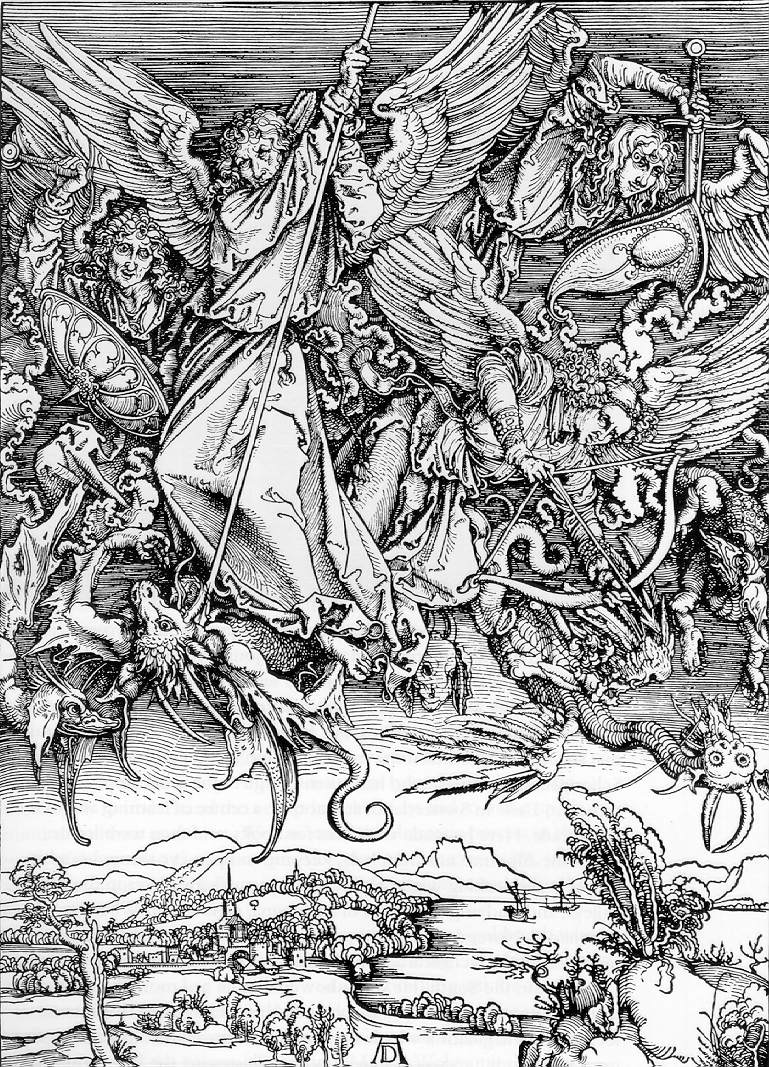
  Woodblock printing is one of the oldest mediums used by 'illustrators' in that it could be mass produced. Almost as soon as the printing press was invented, woodblock illustrations found their way into the text as well, especially in religious manuscripts like this illustration by Albrecht Durer. Outside the Europe though, woodblocks had been in use for far longer, with recorded examples in China from at least 220 b.c. and even a few examples from ancient Egypt.
  There's a nice little trick in Photoshop using the channels tab that allows any drawing to be turned 'transparent,' like an animation cel. Cel shading has been around for quite some time, and used to be hand inked and painted, frame by frame. Cels were inked first, then painted on the back, to eliminate brush strokes from the finished cel. Each one became one frame of the animation. Through the years cel creation became more and more efficient, especially once Xerography was invented, which allowed drawings to be transferred directly onto the clear plastic, rather than having to trace every single one from the original drawing. This process was tested on Sleeping Beauty, and the entire film of 101 Dalmatians was made using this method (which gives it its charming, sketchy look. There's more potential to this though than just cel animation.
  Technical illustration is rather a broad label, covering everything from architectural blueprints, to product design, to concept design for things like robots and armor. Traditionally technical artists relied on rulers and 'rapidograph' pens to get smooth, exact lines with even weight and concise proportions, often showing the lines through the 'skin' of the object so inner workings can be seen. This drawing is how Sorrek's hut (from the last post) is built.